Lübeck, York and the Baedeker Raids

Lübeck Holstentor
What links the German city of Lübeck, a well-known guidebook and the several of England’s more attractive cities?
Wandering around Lübeck recently I was struck by the way the city has been so comprehensively rebuilt since the end of the war.  As with much of central Europe Lübeck was not spared the ravages of war and indeed received special attention by the RAF bombers. The city had been rich in mainly medieval wooden buildings, constructed during its heyday as a trading port, when goods would pass freely between Lübeck and other cities within the Hanseatic League, a commercial alliance that dominated the Baltic for several centuries.
What marks Lübeck out in wartime history is that it was the first significant city that was bombed primarily for its cultural value, rather than for any military objective.  The city was not well defended when the British bombers arrived on 28th March 1942, and by the time the aircraft had dropped around 400 tonnes  of bombs on the city (including for the first time thousands of incendiary devices) the wooden buildings of Lübeck didn’t stand a chance. One of the city’s most prominent buildings, the Lutheran Marienkirche, received particular punishment and even today you can see signs of the war damage as you walk through the enormous church.
Much of Lübeck was either destroyed or badly damaged and around 300 civilians lost their lives that night. The British would later hone their fire-bombing skills to devastating effect on other German targets.
For the German command the bombing of Lübeck was an outrage and a revenge plan was immediately drawn up to revive flagging morale. If the British had chosen Lübeck because of its pretty buildings, the German would use similar criteria for their attacks. Enter the Baedeker guidebook to Great Britain. The authors of the guide used a star system to categorise the main attractions across the country; the higher the rating the more the destination was a must-see for the adventurous German tourist. The message sent out by the Nazis was that they would go out and “bomb every building in Britain marked with three stars in the Baedeker Guide”.
Within a week at the end of April 1942 first Exeter and then Bath, Norwich and York were attacked in night-time bombing raids. The bombs were aimed at cultural rather than military sites and resulted in over 1,000 fatalities, as well as the loss of several old buildings and artefacts. The attacks would later be known as the Baedeker Raids.
Of course, revenge led to further retaliation and in the following rounds of destruction Cologne and Canterbury were hit, before the demands of the war meant that the Germans needed to deploy their limited resources elsewhere and the tit-for-tat attacks diminished.
Visiting York last week it was striking to see the wartime pictures of the city’s Guildhall ablaze during the raids of April 1942. The photos were strikingly reminiscent of the ones I’d seen a few weeks earlier in Lübeck. There was no direct reference in York or Lübeck to the Baedeker Raids and perhaps this is an opportunity lost; after all, the images of historic buildings in both countries being destroyed is one of the most visually powerful symbols of the pointless destruction caused by war.


Knocking on doors in search of a good story

Frustration - banging head
I’m sure many writers will identify with this. Your story gets published and while you might be pleased with the finished article there’s something that the readers will never know: that what you’ve shared with the reader is only half of the story. Indeed the untold back story to an article is often more illuminating than the article itself.
So it was with my recently published article on the BBC Travel site about Jewish Krakow (pdf here for UK folks). I thought I’d use this blog to share my experiences researching this story in Krakow as the experience taught me a lot about the work that can be involved in securing a commissioned story.
First of all, a bit of background. I had a commission to write a feature on Krakow for the National Geographic Traveller magazine (in the current March 2013 issue). As freelancers will appreciate an overseas journey for one story alone is not the most efficient use of time, so I pitched two other ideas. One was immediately accepted (Microbrewing in Poland – pdf) while my rather vague pitch for an article about Jewish Krakow was pushed back to me; I needed to come up with a more focussed angle and I knew I’d have to find it while I was out in Poland.
I flew out to Krakow for two days. On the first afternoon I rushed around collecting the information I needed for my city guide (thankfully I am already familiar with Krakow so I had an advantage here) and the evening was taken up with the arduous task of touring the city’s ale houses.
I had the entire second day to search for an angle for my Jewish Krakow story. My first port of call was the Oscar Schindler factory – an excellent museum telling the tragic story of Krakow during the war years. I was here for 90 minutes and could have easily spent half a day watching the videos and absorbing the testimonies of those who lived through the city’s darkest period. But I didn’t find a real hook on which to build my story.
I then wandered around the streets of Podgorze, the area of the city the Nazis set aside as the Jewish ghetto – it’s a down-at-heel district of Krakow, with a few haunting memorials to the atrocities that took place here; but still nothing stood out for me in terms of a story.
By lunchtime I was back in Kazimierz, known as the Jewish quarter but on the surface resembling an open-air museum of Jewish heritage.  I had heard of some recent immigrants from Israel who had come here to re-establish a Jewish community in the city; I was keen to meet them and was now convinced that this was my hook.
Finding them proved to be easier said than done. I visited the Jewish Cultural Centre and while the staff were cheery and welcoming they couldn’t shed much light on any recent arrivals. They did point me towards a newly opened restaurant and when I arrived there the waiter did indeed confirm that the owner had recently arrived from Israel. Sadly however he was out of town. Could I return tomorrow? I walked away and tended to my hunger with a plate of pierogi, slowly accepting that my quest might draw a blank.
Re-energised by my hearty lunch I set off and soon cast off my inhibitions about walking into any business that appeared to have a Jewish connection. My task was made harder by the fact that it’s apparently cool to look Jewish in Kazimierz and places with no Jewish links are prone to use a bit of Hebrew writing.
After drawing a few more blanks I finally stumbled into the Galeria Szalom, where the owner’s warm welcome suggested she was happy to have someone relieve the boredom of a quiet Thursday afternoon. I explained my mission and she smiled and immediately called up her friend, a lady Rabbi who came to Krakow from Israel to lead the city’s progressive Jewish community. Rabbi Tanya had only just returned home from a trip away and after a quick chat she kindly offered to put off her unpacking to come to the gallery and speak with me. And so after several hours plodding the streets and many doors pushed with no success, I knew I finally had my story.
The experience taught me several lessons that I have tried to take on board in my efforts at staying afloat as a freelance writer. I learned the value of targeting a pitch so that an editor can see clearly that there’s a good story to be told; I saw the importance of stacking up the commissions for a trip to provide the best return on the time spent away from home; but most importantly I saw that if you keep trying, sheer persistence in hunting for a good story will usually bring its rewards

Marshall Islands: a broken paradise

Marshall Islands
Taking in the surroundings of Eneko Island it’s easy to conclude you’ve walked into a photograph on a postcard. Part of the Majuro atoll in the Marshall Islands, the private island ticks all the boxes for a popular view of paradise. White sandy beach, clear turquoise water, palm trees leaning gently over the ocean; all the ingredients of a perfect place and not a soul in sight to spoil it.
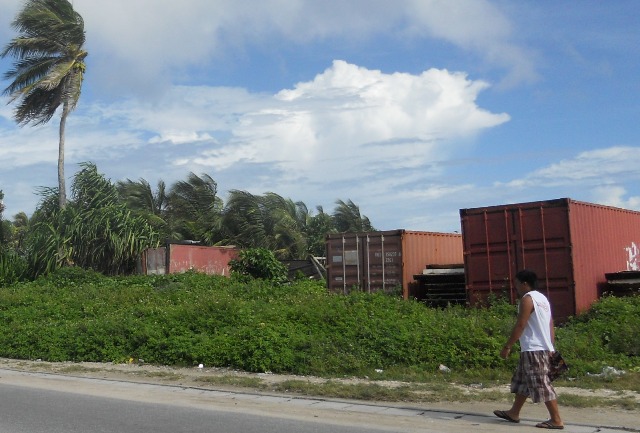
Yet anyone coming to the Marshall Islands for a slice of paradise is likely to get a bit of a shock. While these islands, isolated in the mid-Pacific more than 2000 miles west of Hawaii and 3000 miles east of Manila, do have their idyllic spots poverty and decay are a far more common backdrop than white sand. The road from the airport to the main town of Majuro is lined with rusty shipping containers and many abandoned cars, left to rot in the tropical sun. You’ll be hard pressed to find more than half a dozen buildings in town that boast any architectural merit, with an abundance of corrugated iron and dull grey concrete blocks used to make the buildings that pass for homes and shops. Whatever Majuro is, it ain’t pretty.
A tourist can hardly be expected to appreciate the extent of any country’s social problems during a short visit and in the case of the Marshall Islands that’s probably just as well. Along with the rest of Micronesia the levels of child abuse here are very high and while it doesn’t make good pre-holiday reading this Micronesian Seminar article provides a shocking insight into the scale and causes of these problems. If you read this before you go I can guarantee you’ll be reminded of it when you see a group of children playing in the back streets of Majuro.
The Marshall Islands were never meant to sustain a large population. While fish has always been plentiful the tiny amount of available land is hardly sufficient to feed the current proportion. Perhaps this explains in part the dominance of instant noodles and spam in the local diet (obesity is a major problem).
And if shortage of liveable space was an issue before, continued American military presence has compounded this to an astonishing extent. Having established Bikini Atoll as their favoured site for nuclear testing in 1945, several dozen nukes made not only Bikini uninhabitable for future generations but also neighbouring islands, which received radiation levels so high that even now they are not considered safe for resettlement.
Then there’s the US massive military base at Kwajalein Atoll, which has led many Marshallese to work at the site. Many have been forced to live on the nearby island of Ebeye, where thousands have also been relocated as a long-lasting legacy of the nuclear testing programme. With a population of 15,000 crammed into a mere 80 acres, Ebeye is one of the most densely populated places in the world. With alarming rates of poverty and disease it has earned the unwanted label of the Ghetto of the Pacific.
If you have any doubt about the horrific consequences that the American nuclear tests had on the Marshallese population I would urge you to watch the film Nuclear Savage, made by American film-maker Adam Horowitz. The official site is here (contains a short trailer) and I’ve found the full 80 minute moviehere on Vimeo (it’s in English but with Spanish subtitles). A very difficult film to watch and having watched the full movie while in our Majuro hotel I defy anyone to sit through it and not get extremely angry.
Majuro street

So why on earth, given my descriptions above, would anyone want to go to the Marshall Islands? They’re so far from anywhere, with poor flight connections each involving multiple stops in places that perhaps have far more to offer. A few divers come here to explore some of the most accessible and impressive wrecks in the world. We met a group of surfers on our first day – they were passing through, heading out onto a live-aboard boat for the next two weeks.
Yet I would say those who do make it out to the Marshall Islands will probably list it as one of their most memorable travel experiences. Highlights listed by the Visitors Authority are certainly low-key – they include a visit to a copra (coconut meat) processing factory and a canoe-building workshop (more on that in this article). But wherever we stopped by we were met with curiosity, warm smiles and willingness to show us whatever we wanted to see. We were even invited to a quiz night in one of Majuro’s few restaurants by an ex-pat we met on our wanders around the town.
By day five we were being greeted by toots of the horn and waves of recognition as we walked along the only road in town. We’d met several islanders who had opened up and shared with us their family history on Majuro and the neighbouring atolls and helped give us an appreciation of both the good parts and the problems of island life.
While we may not have seen any single sight that made Majuro unforgettable for us, we left with many happy memories of a time well spent. Beyond the grubby exterior of Majuro there was more than enough to make us glad we came.

Sanchi

Sanchi

The Grand Stupa built by Ashoka at Sanchi is focal point of a 91 –meter-high turf covered and tree-dotted hill and marks an important stage in the evolution of Indian architecture. The great Stupa is 36.5 meters in diameter and rises almost 16.5 meters high.A balustrade encircles the entire structure and provides incarnations as Bodhisattva have provided the principal inspiration for the artistes.


The intricately carved gateways hold the greatest fascination for visitors. Gateways, the four ornamented (torans) built at the cardinal points in front of the entrances were erected around 3.5 B.C by the Satvahana ruler, Satkarni. Each torans consists of two upright pillars nearly 34 feet high. The two richly carved pillars, rise to be crowned by carved lions-the famous Ashoka Lions, now the official seal of India –elephants and dwarfs.

 
The eastern gateway depicts Buddha’s journey towards enlightenment. It shows the young prince Siddhartha Gautama , leaving his father’s Palace and setting off on his journey to enlightenment.
The western gateway depicts the seven incarnation of the Buddha.

The northern gateway, crowned by a wheel of law, illustrates the miracles associated with the Buddha as told in the Jatakas.

The southern gateway is the oldest and reveals the birth of Gautama in series of dramatically rich carvings. It also depicts the wheel of forth, the first sermon given by the Buddha at Sarnath.
Ashokan Pillar Just to the right of the southern gateway lie the remains of Ashokan pillar erected by Ashoka in the 3rd century, displaying all the characteristics of such monoliths – exquisite proportion, brilliant polish, succinct instructions. Centuries of exposure to weather has not diminished its metallic glow.
 
Excursions from Sanchi In the area around Sanchi there are a number of site, some of which are Buddhist .
Vidisha In the 5th-6th centuries BC Videsha was an important trade center of the Sunga dynasty where Ashoka was governor in the 3rd century BC. He married a local princess, establishing his contact with Sanchi. The ruins of Bijamandal Mosque and Gumbaz- Ka Makbara, both dating from the Muslim period with remains of votive pillars nearby. The museum at Vidisha contains some of Bbesnagar’s earliest antiquities.

Udaygiri caves (13 km) Udaygiri caves were produced during the regime of Chandraguta II (382-401). The caves have all distinct features that gave Gupta art its unique vitality, vigour and richness of expression. The beautifully molded capitals, the design of the entrance gateway and the system of continuing the architrave as a string course around the structure.

Besnagar 3 km after crossing the Betwa river. The Heliodorus Pillar, A monolithic free standing column, similar to Asokan pillars but much smaller in size has been dated to 140BC. The inscription states that it was a Garuda pillar erected in owner of Vasudeva by Heliodorus, a resident of Taxila (now in Pak) who had been sent as an envoy to the court of Bhagabhadra . This is a part of the evidence, which shows that relations existed between the Greeks in the Punjab and the kings of this area and that Heliodorus had become a follower of lord Vishnu.
 
Udaypur 60 km from Udaygari. The colossal Neelkantheswara temple is the center- piece , an outstanding example of 11th century Paramara architecture.Its beauty lies in its well proportionate and gracefully designed Shikhar (spire) and the delicate carving adorning its sites. Some regard the spire as being unequalled. Built of red stand stone and standing on a high platform the temple consists of garbha-griha (shrine room) . A sabha mandap (Hall) and three parvesh mandaps (entrance porches)

Gyaraspur (40 km North East of Sanchi) :-Important place of the medieval period, now lies in ruins, where one can see temples called Athkhambha (Eight Pillars) and Chaukhamba (four pillars) belonging to the 9th and 10th centuries A.D. The 10th century MAHADEV temple on the hill above the village, is the most striking of the remains with the ruins of stupa. The ruins of an 8-pillared temple,"Athakhambe" and a 4 pillared "Chaukhamba" date fro m 9th and 10th centuries. 

About Travelsphere

About Travelsphere
Travelsphere is a collection of travel articles, personal opinions, rants and the occasional feeble attempt at being funny. The content follows no particular logic and the site is updated when I think of something to write and have the time to do it.
For some reason Travelsphere was recently listed in The Times list of 50 Travel Websites You Can’t Live Without – a dubious accolade but very nice to be mentioned. Even more recently it was also listed in the Independent’s 50 Best Travel Websites - a nice surprise for me to discover.
I have deliberately kept this as a non-commercial site . The travel I describe on this site has been self-funded and independently arranged unless explicitly stated otherwise.

Mandu

Mandu
 
In this "City of Joy" I still hear the Rani Roopmati’s lyrical voice across the Narmada, which remembers me the love tales of the poet-prince Baz Bahadur for the beautiful Rani Rupmati. Mandu, the fortress of joy, rises 634 meters high in the Vindhya Range and is enclosed in battlements 37 km long. With-in this well-defended plateau is wealth of palaces, pleasure pavilions, mansions, tombs and mosques.

The hill range is endowed with a very attractive natural scenery, which is at its best during the rainy season, when on all sides, it is clothed in green with a number of brooks and torrents, rushing down into the ravine winding about its sides below. The beauty of which is further enhanced by about a dozen lakes and ponds interspersed on its top.
Emperor Jehangir who journeyed all the way from Delhi to spend time here wrote " I Know of no place so pleasant in climate and so pretty in scenery as Mandu during the rains." It was called by the Muslim rulers as Shadiabad, " The City of Joy".

Each of Mandu’s structures is an architectural gem and the monuments were raised in the period of hardly 125 years, between 1401 A.D to 1526 A.D; some are out standing like massive Massive Jami Massjid and Hoshang Shah’s tomb, which provided inspiration for the master builders of the Magnificent Taj Mahal centuries later.

 
Hindola Mahal,Sultan Ghiyasud-din Khilji also built the Hindola Mahal, or the Swinging Palace. It got this name from its sloping walls which looked like the trestle supports of a swing. It was a       great audience hall of the King of Mandu.
Roopmati’s Pavilion On the lofty crest of the hill to the south beyond the place of Baz Bahadur stand the pavilions associated with the romantic name of Roopmati. The Pavilion was originally built as an army observation post. From its hills perch, this graceful structure with its two pavilions was a retreat of the lovely queen, from where she could see Baz Bahadur’s palace and the sacred river Narmada,the stream of which is seen is from here on a clear sunny day, winding about like a white serpent on the plains below. To enjoy the romantic beauty of the site one should visit at the time of sunset or in a clear moon-light when he will surely feel himself to be in a fairly dream-land of the past, an experienced he might never forget.
Baz Bahadur PalaceThe 6th century palace is situated on the slopes of a hill in the midst of picturesque natural scenery with a wide courtyard and encircled by halls and high terraces.
Hoshang Shah’s TombRetains the masculinity and majesty of the Afgan ruler and is one of the finest example of Afgan architecture. It has a beautiful dome, marble lattice work, porticos, courts and towers.
Jami Mashid Built on the lines of the great mosque of Damascus this grand mosque stands on a high ground with a porch protruding in the center. Its construction was started by Hoshang and completed by Mahmud Khalji in 1454 A.D

Jahaze Mahal
  A 120 meter,. Long double-storied pleasure palace built between two lakes Munji Talao and Kanpur Talao, resembles a ship and during monsoons it resembles a ship sailing in a great lake. Sultan Ghiyasud-din Khilji who reigned for 31 years from 1469 built this Palace for his large harem of 15,000 women.

Mugal emperor Jahangir and his beautiful wife, Nur Janhan, lived here often and held memorable lantern-lit parties and functions, about one of which the emperor writes: "It was a wonderful assembly.In the beginning of the evening they lighted lanterns and lamps all round the tanks and buildings and a lighting up was carried out like of which has never been arranged in any place. The lanterns and lamps cast their reflection on the water and it appeared as if the whole surfact of the tank was a plain fire. A grand entertainment took place and the drunkards indulged themselves to excess".
One can just imagine the original beauty of the construction and the joys of life it witnessed from the above account.
 

Kanha National Park

Kanha National Park       
Rudyard Kipling:- British author and Nobel Laureate, set his tales of
the boy brought up by wolves in the Jungle of Kanha
National Park in 'The Jungle Book'.     


The Kanha National Park is unique and we can compare as we visited lots of NP in US, Uganda, Kenia, Namibia and other. This park offers a fantastic variety of landscape : grassland, dense forest, small lakes, rockies hills. We made 9 game-drives and we saw tigers at 6 of them, including a tigeres with her 4 cubs. We missed seeing a leopard and a sloth bear, but in fact, viewing the tigers from so close (sometimes 10m from our open jeep) was more then we ever expected. If you go there, ask for Arun Kumar Yadav to be your driver, he is just the best in finding the tigers. I also want to recommend our travel agent vishal from 'Indian Excursion' ( info@travelcentralindia.com ) who prepared & organized this private tour for us. It was just perfectly done. During the tour, vishal called us at least 3 times to check if everything was ok. He was just pampering us. Great !
Gerrit Lachaert
Nossegem, Belgium
There are approx 131 Tigers in Kanha National Park

 
Safaris in Kanha National Park

It was a magic, heart stopping moment! Absolutely wonderful when we first saw the Tiger in Kanha. 
Jennie & David from Australia did the safari in Kanha in December 2009,  it’s the diary written by Jennie Thomas sharing her experiences in Kanha National Park. 
Breaking News from Jennie 13 December 2009
Not one, not two, not three BUT FOUR TIGERS today... and I got to see them from the back of an elephant. They were all the thirteen month old cubs of what must be a wonderful mother tiger because they were all large and healthy. They don't hunt for themselves until they are 20 mths old. I've also had a great massage this afternoon. So what's in store for tomorrow!! Who knows but I'll tell you when it happens.


Kanha National park is located in the Mandla district of Madhya Pradesh and it extends over an area of over 1,940-sq-kms.

The major feature of this region's interesting topography is the horseshoe shape valley and the whole park area is surrounded by the spurs of the Mekal.

By a special statue in 1955, Kanha national park came into being since then, a series of stringent  conservation programmes for the protection of the park’s flora and fauna has given Kanha its deserved reputation for being one of the finest and best administered national parks in Asia, an  irresistible attraction for all wild life lovers a true haven for its animal and avian population.

Kanha national park has 22 species of mammals. Those most easily spotted are TIGER, Indian hare, Indian wild dog, the Stripped Palm Squirrel, Common langur, Jackal, Wild Pig, Chital or Spotless deer, Barasingha or Swamp deer, Sambar and black Buck.

Patient watching should reward the visitor, with a sight of Indian Fox, Sloth bear, Striped hyena, Jungle cut, Lepord, Mouse Deer, Chausingha or four horned antelope, Nilgai, Ratel and Porcupine.


Avian Species: Kanha National Park has some 200 species of birds. Watchers should station
themselves in the hills, where the mixed and bamboo forests harbour many
species and in the grassy forest clearings. Water birds can be seen near the
park’s many rivulets and at Sarvantal, a pool that is frequented by water birds and the area in front of the museum.


Kanha’s Sal and Bamboo forest ,rolling grasslands and meandering stream stretch over the 940 km. The abundance and wild life species in Kanha national park, forms the core of the Kanha tiger reserve created in1974 under project tiger. The park is only habitat of the rare hard grounder Barasingha.


(Cervus Duvaceli Branderi). In 1930s, the Kanha area was divided into two santuaries; Hallon and Banjar of 250kms to 300kms each. Though one of these was subsequently disbanded .The area remained a protected one until 1947. Depletion of the tiger population in the year that followed led to the area being made an absolute sanctuary in 1952.


Information Center:

How to Reach Kanha National Park:
By Air:
 Jabalpur at 200 -kms is the nearest airport connected directly with New Delhi and Mumbai airport to visit Kanha National
Park.

Rail: Jabalpur at 175-kms is the convenient rail head to visit Kanha.

Road: Kanha National Park is connected by road with Jabalpur 175-kms, Khajuraho 445-kms, Nagpur 266-kms,
Raipur 219-kms. Within the park: Koshi - Kanha (9-kms), Kishi - Katia (4-kms), Kishi - Mukki (32-kms).
There are regular to and fro bus service available from Jabalpur to Kanha.

Best Season to Visit Kanha National Park: February to June although cool season (October to February) is much more comfortable and still very good for
wildlife. The park is closed from July 01 to October 01 because of the monsoon.

Park Visit Timings1. 15 November to 15 February - Sunrise to 12.00 noon and 3.00 pm to Sunset.
2. 16 February to 30 April - Sunrise to 1200 noon and 4.00 pm to Sunset.
3. 1 May to 30 June - Sunrise to 11.00 am and 5.00 pm to Sunset.

Pench National Park

Pench National Park


There were four of them... three males and one female. One male growled his ʻwelcomeʼ and then this female came out towards us. She stayed for a photo shoot and then retired for a sleep. It was totally awesome! They were large animals even though they were only 13 months old. Their mother had obviously gone off to hunt somewhere nearby - and she must be a very good
hunter to raise four healthy cubs. She is the sole provider for five animals.

Jennie & David from Australia did the safari in Pench in December 2009,  it’s the diary written by Jennie Thomas sharing her experiences in Pench National Park.


Pench national park is situated in the area of 542.66 Square km. The Park is famous for the elusive tiger, Indian bison, leopard, wild dog and a host of other wildlife and avian species like Chital, Sambar, Nilgai, Deer and Wild Boar.
  

Information Center:

How to Reach Pench National Park: 
By Air: Nagpur at 88 -kms is the nearest airport connected directly with New Delhi, Mumbai airport to visit Pench National

Rail: Nagpur at 88-kms is the convenient rail head to visit Pench.

Road: Nagpur is only 88 kms from Pench via Seoni (NH No. 7) Nagpur is well connect all the Major City of India

Best Season to Visit Pench National Park: 
February to June although cool season (October to February) is much more comfortable and still very good for
wildlife. The park is closed from July 01 to October 01 because of the monsoon.

Park Visit Timings
1. 15 November to 15 February - Sunrise to 12.00 noon and 3.00 pm to Sunset.
2. 16 February to 30 April - Sunrise to 1200 noon and 4.00 pm to Sunset.
3. 1 May to 30 June - Sunrise to 11.00 am and 5.00 pm to Sunset.

MP Temples

Amarkantak 
 

Amarkantak
Spreading over a flattish green valley in the Vindhya ranges, at a pleasantly cool elevation of 1065 meters, it is still more a hamlet than a town. This, in spite of the fact that two sacred rivers are born here: the Sone and the Narmada.
Curiously, Amarkantak has none of the teeming grottiness often associated with popular pilgrim towns. It really is more like a green sub- mountain resort with wide-open, well watered, meadows and sunlit sal forests alive with springs and brooks. 

The stream of Sone is fed few hundred meters from its birth, by a number of tributary rills. The Sone becomes the main southern tributary of the Ganges, 

Joining that great river near Patna. Amarkantak, in the green bowl in the old Vindhyas, is the serene epitome of that titanic power.

 
OmKareshwar

This holy island is shaped like the sacred Hindu symbol "OM". Here the Narmada and the Kaveri rivers meet and the pilgrims gather at the confluence in large numbers to pay obeisance before the Joytirlanga OM kareshwar
(one of the twelve Joytirlangas at the Temple of Shri Omkar Mandhata. The spectacle of hundreds of brightly dressed devotees worshipping and bathing on these riverine landing steps or ghats, is a ‘happening’ that is unique to Hinduism.
The temple on these ghats are excellently carved and sculpted; every pillar and panel would occupy a pride of place in any museum in the world. The temples and banks become colorful during festivals particularly the major ones of Dussehra and Diwali.
Omkareshwar is on a temple-dotted island at the confluence of the Narmada and Kaveri rivers. During major festivals, townships of tents and huts spring up on the banks, and flotillas of decorated boats ferry pilgrims across the water.

Shri Omkar Mandhata :- This temple, situated on an island, is made of soft stone with intricately carved frizes. Encircling the shrine are verandahs with columns which are richly carved.

Siddhnath Temple:- Built in the traditional of early medieval Brahmanic architecture it has a unique frize of elephants carved upon a stone slab at its outer perimeter.

24 Avatars :- A group of Hindu and Jain temples displaying architectural expertise in each structure.

Satmatrika temple:- A group of 10th century temple situated 6 km from the city.

Kajal Rani Caves:- Nine km from the city from here one can get an uninterrupted view of the gentle undulating landscape.

 
Maheshwar

Maheshwar was a glorious city in the dawn of Indian civilization when it was known as Mahismati, capital of King Kartvirarjun. This temple town on the banks of the river Narmada finds mention in the epics Ramayana and Mahabharata.
Having been revived to its ancient glory by Rani Ahilyabai of Indore, the town with its temple and fortress stands in serene dignity. Maheshwar is also famed for the manor, the walled mansion of the 18th century queen and the state of Holkar, Ahalyabai. She was a very wise, powerful and virtuous woman who has now been virtually deified by her subjects. She introduced and encouraged the weaving of Maheshwari saris; still a popular craft in Maheshwar.

Temples:- Meheswar’s temples stand high with spires reaching out to the sky. Their balconies and carved doorways are a sight to behold. Temples to visit are Kaleshwara, Rajarajeshwara, Vithaleshwara and Ahileshwar temples.

Ragaddi and Rajwada:- Located with-in the fort complex is a life size statue of Rani Ahilyabai seated on throne. Other fascinating relics and heirlooms of the heirlooms of the Holkar dynasty can be seen in the rooms, which are open to the public.

Ghats :- Along the Narmada river are the Pehwa Fanase and Ahilya Ghats. A flight of step lead down to the river, often crowded with pilgrims.

Maheshwari saree:- Introduced into Maheshwar 250 years ago by Rani Ahilyabai, the sarees are renowned throughout India. Woven mostly in cotton the "palu" is distinctive with five strips, three colored and two white alternating running along its with hand reversible border, known as Bugdi.

Jabalpur

Jabalpur

Jabalpur the capital and pleasure resort of the Gond Kings during the 12th century is famous for its natural wonders Bhedaghat. 
 
Jabalpur! Why would you want to go there ?
Jennie & David from Australia visited Jabalpur  in December 2009,  it’s the diary written by Jennie Thomas sharing her experiences in Jabalpur. 
 
Bheraghat (Marble Mountains)
Soaring in glitter splendor, the marble rocks at Bheraghat rise to a hundred feet on either side of the Narmada. The serene loveliness of the scene is one of cool quite, the sunlight sparkling on the marble-white pinnacles and casting dappled shadows on the pellucid waters. In his high lands of Central India Capt J Forsyth wrote of them: ‘The eye never wearies of the effect produced by the broken and reflected sunlight, now glancing from a pinnacle of snow-white marble reared against the deep blue of the sky as far from a point of silver; touching here and therewith bright lights the prominences of the middle heights; and again losing itself in the soft bluish greys of their recesses..’. These white rocks with views of black/dark green volcanic seams rise to 30m on either side of the Narmada river and in moonlight produce a magical effect.Boating on a moonlit night, when the whole stretch of water is transformed into a sheet of liquid silver is absolutely magical and enchanting.


Dhuandhar Falls
The Narmada making its way through the Marble Rocks narrow down and then plunges in a waterfall known as Dhuandhar or the smoke cascade. So powerful is the plunge that its roar is heard from a far distance. The falls and the breaking of the volume of water at the crest present an awesome spectacle of nature’s power unleashed.


The Madan Mahal Fort (1116 A.D) was built by Gond ruler Madan Shah. The fort is very simple structure with out any ornamentation. It commands a magnificent view of Jabalpur Township and the valley around.
Ranidurgavati's sculpture.
Rani Durgavati Memorial and Museum
One of the largest tal in the city having historical importance is the Rani Tal; built by the celebrated Rani Durgavati. The Archlogical Museum displays a fine collection on sculptures, inscriptions and prehistoric relics.

Chaunsath Yogini
Perched atop a hillock and approached by a long flight of steps, Chaunsath Yogini temple commands a singularly beautiful view of the Narmada flowing through the jagged Marble Rocks. Dedicated to Durga the tenth century shrine is decorated with exquisite stone carving.
Tilwara Ghat
The Tilwara Ghat locality is situated on the banks of the Narmada where Mahatma Gandhi’s ashes were immersed. There is an old Mahadeva (Tilwadeshwar) temple.
 
Excursion to Mandala: Mandla was the capital of the ancient Gond Kingdom of Garha- Mandla early in the Christan era. The Gond Queen Rani Durgavati took here when her army was concerned by Mugal forces under Asaf Khan in 1564. The fort here was built in the 17th century and is surrounded on 3 sides by the Narmada River. It passed to the Marathas and then to the British in 1818. The jungle has since taken over the ruins (only a few towers remain) though there are some temples and ghats in the town. The Gond Raja, Hirde Shah built a large palace in a commanding site nearby in Ramnagar(15 km) of which little remains. Kanha national park is about 40 km from Mandala.

Bandhavgarh National Park

Bandhavgarh National Park       
There are approx 56 Tigers in Bandhavgarh National Park.


Bandhavgarh National Park: It is also known as white tiger country, this is a small National park, compact yet full of  game. 
The forests of Bandhavgarh is most deciduous. The density of tiger population at Bandhavgarh is the highest known in India.It is equally rich in bird life, boasting of over 200 species. 

The flowering and fruit trees attract woodland birds,   which include green pigeon, Jerdon’s leaf bird, crested serpent eagle, and variable hawk eagle. About Bandhavgarh National Park: Prior to becoming a National Park, the  forests around Bandhavgarh have been maintained as Shilagarh or game preserve,of  the Maharaja of Rewa in 1947. Rewa State was merged with M.P (Madhya Pradesh) Bandhavgarh came under the regulation of M.P. Covering 448 Sqm, Bandhavgarh is situated in Shadhol district among the outlying hills of Vindhya Range.


At the center of the park in Bandhavgarh hill, rising 811 meters above MSL surrounding it a large number of smaller hills separated by gently sloping valleys. 


Bandhavgarh is densely populated with other species the great Gaur, or Indian Bison can be seen with ease as they come onto the meadows to graze at dusk. Sambas, Chital, Chinkara, Muntjac, wild pigs and Barking Deer are a common sight and Nilgai and Chinkara are to be seen in the more open areas in the park.


Bandhavgarh FortOver the Bandhavgarh hills, dominating the park stands Bandhavgarh Fort on the highest point, thought to be
some  2000 years old. Scattered through out park and particularly around the fort are numerous prehistoric caves  rich with shrines and ancient Sanskrit inscriptions.  

Kalchuri Archeological Remains:
Apart from the rich wildlife, Bandhavgarh is also famous for the archaeological remains
of the Kalchuri period that had been found here.

         The park is closed from July 01 to October 01.


Information Center:
The park is closed from July 01 to October 01.

How to Reach Bandhavgarh National Park: 
            
By Air: Jabalpur airport is the nearest airport to Bandhavgarh National Park which is connected to New Delhi
by Daily flight and from where it is 04 hours drive to Bandhavgarh.

Khajuraho airport is another optionfrom where it is a seven hours drive (237Km). Though long, the driver is interesting; the road crosses the Ken river, some stretches of which have been declared a crocodile sanctuary famous for the ghariyal, a
rare fish eating crocodile; and goes past Panna town, famous for its diamond mines, to Satna, the midway-point, from where it branches off on a subsidiary road across ridges of Vindhyachal to Bandhavgarh.

By Rail: The nearest railway station near Bandhavgarh are Jabalpur (164 Km), Katni (102 Km) and Satna (120  
Km) on the central railway and Umaria (35 Km) on the South Eastern Railway.

By Road: The Park Can be reached from Jabalpur (175 km), Satna (120 km), Katni, Umeria(35 Km), and          
Khajuraho (237 km).

Best Season to visit Bandhavgarh National Park:
November to June. The Park is closed from 1st July to 01st October. 

Orchaa

Orchha                  
 
Orchha’s grandeur has been captured in stone, frozen in time a rich legacy to the ages. It was founded in the 16th century by the Bundela Rajput chief captain Rudra Pratap who choose this stretch land along the Betwa river as an ideal site for his
caption of the succeeding rulers. From here the view of soaring temples spires and cenotaphs is spectacular. Orchha’s fort complex approached by a multi-arched bridge, has three palaces opened quadrangle.
 
 
A huge, imperial structure with balconies, domes and a forbidding door.
Built by Raja Bir Sing Ju Deo in the 17th Century to commemorate the visit of emperor Jahangir to Orchha. Its strong lines are counter balance by delicate chattries and trellis work.


Raj Mahal. 

Situated to the right of the quadrangle this was built by Madhukar Shah, the deeply religious predecessor of Bir Singh Ju Deo. The plan exteriors crowned by chattries, give way to interiors with exquisite morals, boldly colorful, on a variety of relies themes.

Ram Raja Mahal Madhukar Shah’s wife once had a dream that she should install the idol of Lord Rama at Orchha, which she brought from Ayodhya. It was kept in the palace, now known as the Ram Raja Temple which is the only temple where Rama is worshipped as king.
Laxminarayana Temple
 The interior’s contains the most exquisite of Orchha’s, wall paintings covering the walls and ceiling of three halls, these murals are vibrant compositions and cover a variety of spiritual and secular subjects. They are in an excellent state of preservation with the colors retaining their vivid quality.

Chaturbhuj Temple The temple with its wonderful improvised style, and its magnitude, dominates the town area of Orchha. As its name implies, it is dedicated to the "four armed" Vishnu and its layout visually reproduces these four arms. Built by Bir Sing Deo (1606-1627), the temple stands on a huge stone pedestal, about 15 ft high, reached by a large flight of steps leading up to a porch.

 
Chattries (Cenotaphs)
There are fourteen Chatrries or memorials to the rulers of Orchha grouped along the kanchan gaht of the river Betwa.


General Information:
How to Reach:
By Air: Regular services link Orchha with Jhansi, Agra, Gwalior.
By Rail: The nearest railhead is Jhansi  (94 Km) 
By Road: 
Orchha is connected by regular buses with Satna, Harpalpur, Jhansi and Mahoba.

Best Season: July to March.

Gwalior

Gwalior
 
The splendor of this royal city is living since sixth century. Once upon a time the patron saint of the shepherds and cowherds, Gwallipa, cured a king a of leprosy and thus the city got its name Gwalior on the saint.

With the decline of Muslim power in Delhi, Gwalior fell under the sway the Marathas- Scindias assumed sovereign power. The Scindias, counted among the most glamorous of Indian princes, became famous of their wealth and were popular with successive viceroys because of their generous hospitality and capacity to organize thrilling tiger shoots for visiting dignitaries.
 
Gwalior Fort 


A glazed frieze in Gwalior Fort.

Rock cut icons of Bahubali at the fort.
Towering 100 meters above the town in splendid isolation on a solid rock of sandstone, the fort is reckoned the most imposing citadel in India and the Palace houses a priceless collection of rare objects de art.

Then there are huge rock cut icons of Bahubali, a Jain Master which the visitor of the giant Buddhas found in Bamiyan in Afghanistan. Executed in the 15th century the tallest figure is almost17 meters high is made on the rock over which the fort is situated.

The main entrance on the eastern side affords a breathtaking view of the ever-extending plains of the Indian heartland. Six gates built in a distinct Hindu or Muslim style lead the way up to the summit. There are six Palaces encircled by the massive ramparts of this fort- these again show a beautiful blending of the Hindu and Muslim styles and testify the catholic taste and tolerance of the ruling dynasty.

There are many water tanks in the fort. The most prominent are the Johar Kund, where the Rajput women immolated themselves to save their honour when defeat and disgrace were imminent, and the Suraj Kund, where the family deity of the Scindias,the sun god, was worshipped. It is an impressive mustachioed Surya that blazons forth from the royal emblem of Gwalior.

Jas Vilas Palace

Jai Vilas Palace
Jai Vilas is unmatched in scale and splendour The durbar hall for formal audience measures 15 meters by 85 meters with the roof over 12 meters high. The ceiling is painted in pale green and gold and the floor is covered with perhaps the largest one-piece carpet woven in situ by the carpet makers in the world. This is the room about which lady Dufferin the Vicereine exclaimed in 1884, " The magnificent room in which we lost ourselves last night". The two crystal chandeliers are reputed to be the largest in the world with the possible exception of one on display in the Tsar’s winter palace outside Moscow. When the huge chandeliers were about to be installed, doubts were expressed whether the ceiling would bear the combined weight of about six tons. The ruler of Gwalior could indulge in such expensive fancies because he was one of the richest men of his tome. Griffith, a British author, has provided a glimpse of the treasure he had amassed.

"In addition to coins, there was an inestimable quantity of Jewels which rivaled Alladin’s store. Thos collection… was the largest in the world He ( Jayajirao Scindia) had in his vaults, silver coins that could be counted in millions, manigicent pearls and diamonds by the ten thousands, rubies, emeralds and other gems by the thousands and wrought and melted gold by the maund". ( A maund, it is useful to recall, is Indian measure of weight used for wholesale purchase of grains and equals 35 kilos approximately.)

 
Mansing Palace
Mansingh palace is the most attractive of the palaces. The façade was originally covered with white plaster and the domes plated with copper. The courtyard and the rooms are ornamented with intricate carvings. A wall of hewn stand stone about 100 meters long and 30 meters high crowned by ornamental frieze of brilliant tiles, the ornamentation is further embellished by beautiful domes connected together by a balustrade of delicately wrought stone carvings.
Gujari Mahal
There is an other beautiful palace named Gujari Mahal, commissioned by Mansingh to satisfy a whim of his beloved queen Mrignayani. The epithet refers to the lady’s fawn like eyes. She is the heroine of many a folk ballad and the subject of a many historical novel. ( Mrignayani by Vrindavanlal Varma is a beautiful novel on her)

There are other surprises that Gwalior stores in its magic box. These includes the beautiful buildings namely Teli ka Mandir, Sas Bahu ka Mandir and the mausoleum of the sufi saint Gaus Mohammad are among the most well known.

Teli ka Mandir dates back to 8th century. It is the loftiest building in the fort soaring 35 meters high and presents a curious blending of the North Indian and the southern style of temples architecture. Sculptures decorating it indicate that it started as a temple dedicated to Vishnu but was later converted for the worship of the other major Hindu God Shiva. The Sas Bahu Ka Mandir was built by the Mahipala the Kachchwah king in the early 11th century. It was originally called the Sahastrabahu temple and is the most ancient structure in the fort.
Photo
Moti Mahal
Jaivilas despite its opulence did not become the Maharaja’s favorite. It was more suited for a European prince than an oriental potentate. Another Palace was commissioned. Thus was Moti Mahal born, a modest mansion with nine hundred rooms. It draws inspiration from the medieval buildings in Gwalior and has an unmistakable oriental ambience with curving colonnaded terraces flanked by square towers. In the rear is the grand fort and in front an artificial lake sets it off as a showpiece.

Khujuraho

1-Khajuraho                 

 Khajuraho Temples are the world heritage site.

Khajuraho, the exuberance of Indian spirit represents a paean to life, love, to joy-perfect in execution and sublime in expression. The Khajuraho temples are internationally famous for the erotic sculptures that adorn the walls. Life in every form and mood, has been captured in stone, testifying not only to the craftsman’s artistry but also to the extraordinary breadth of vision of the Chandela Rajputs under whose rule the temples were conceived and constructed.

Western Group of Temples
The most prominent structure at Khajuraho is the Kandariya Mahadeo temple, which is the largest soars 31 km high, dedicated to Lord Shiva, the sanctum enshrines a lingam( a phallic symbol, a symbol of energy, fertility and potency).
 
The amorous couples are most sensuously depicted in the Chaunsath Yogini temple, the only granite temple and the earliest surviving shrine of the group (900 A.D), is dedicated to goddess Kali.

Facing eastwards to the rising sum , Chitragupta temple is dedicated to the Sun God Surya . The image of the deity in the inner sanctum is particularly imposing; five feet high and driving a horse drawn chariot.

A three headed image of Brahma is enshrined in Vishwanath Temple. The approach is equally impressive, with lions flaking the northern and elephants the southern steps that lead up to it.

The lintel over the entrance of beautiful Lakshman Temple shows the trinity of Lords Brahma, Vishnu and Shiva, with Lakshmi, Vishnu’s consort. The finely carved sanctum has a three-headed idol of Vishnu’s incarnations, Narasimha and Varaha.

One of the oldest temple, Matengeswara temple, is dedicated to Lord Shiva and has an eight feet high lingam.
 
Eastern Group of Temples
The temples in this group can be subdivided into two one being a cluster of Jain temples and another scattered through the small village

Parsvanath Temple is the largest in this group. The temple was initially dedicated to Adinath but the statue was replaced by that of Parsavanath in 1860 A.D.

The Jain temple, Gantai temple, has a frieze, which depicts the 16 dreams of Mahavira’s mother and a Jain goddess on a winged Garuda.

Dedicated to the Jain saint Adinath, Adinath Temple is lavishly embellished with sculpted figures, including Yakshis. The three Hindu temples of the group are the Brahma containing a four-faced linga; the Vamana, which is adorned on its outer walls with carvings of Apsaras in a variety of sensuous attitudes; and the Javari, with a richly carved gateway and exterior sculptors.


Southern Group of Temples

This comprises only two temples. A track running south from Jain enclosures reaches the first called Duladeo Temple. It is among the latest built temples at Khajuraho, more accurate, finer and equally graceful, with figures of Mithuna (sexual intercourse) and women in various poses. The other temple is Chaturbhuj Temple which has a three meter image of Vishnu.

History:  Khajuraho was once the great bustling capital of the aggressive kingdom of the Chandellas, the moon dynasty. And the legend of the origins of that dynasty could be sung as a full-throated opera full of mystery, seduction, tragedy and final triumph. The dynasty of Chandellas started as a result of a divine seduction!
Once, a mythical time ago, Hemavati, the beautiful daughter of a priest, was seen bathing in moonlit lake by Chandrama, the moon. The bright immortal descended on earth and fascinated her. But when dawn came and Chandrma (moon) had to depart , he promised the distraught Hemavati that the son born of their union would be great king and possess the Philosopher’s stone which would turn base metals into gold and he will built a castle on the Kalinger mountain. Chandrma also told her that when your son become 16 years of age then ask him to perform a Yagna (ritual) that will again make you pious.
All that he had promised came true. Their son, Chandravarman was born, and at the age of 16, he saw both a tiger and a lion with a stone. He then founded the great Chandella dynasty, which ruled this area for more than a hundred years.
Chandravarman, performed the Yagna for her mother and built 25 temples. And that place became the Mehoba (the Moon’s festive place) and founded his capital there. Chandellas grew so powerful that they established themselves as independent rulers under Yasovarman and who is also Known as Lakshvarman. Lakshvarman celebrated his self-acquired kingship in the way that many rulers have done before him all over the world: he built a mighty shrine and thus started the great era of temple building in Khajuraho.


General Information:
How to Reach:
By Air: Regular services link Khajuraho with Delhi, Agra, and Varanasi.
By Rail: The nearest railheads are Harpalpur (94 Km) and Mahoba (61 Km). Jhansi (172 Km) is a convenient railhead for those traveling from Delhi and Chennai; Satna (117 Km), on the Mumbai-Allahabad line of the Central Railway for those coming from Mumbai, Kolkata and Varanasi.
By Road: Khajuraho is connected by regular buses with Satna, Harpalpur, Jhansi and Mahoba.

Best Season: July to March.
O


Architecture of the TemplesThe temples belong to the Nagar style – the dominant style in the north. These are more compact and are built on a raised platform . The plan includes a portico- mandap, the antechamber- ardhamandap, the sanctum sanctorum- garbhagriha and the circumambulatory path – parikrama . The most striking feature of these temples is the curvilinear shikhar – the towering pinnacle. The main shikhar is wonderfully buttressed with the many miniature shikhars which dramatically enhance the effect of soaring upwards.
The sculptores and statues have their own terminology:
Apsara- heavenly nymph, beautiful dancing women.
Mithuna- Kahjuraho’s most famous image, sensuously carved and erotic.
Salabhanjika- female figure with tree, which together act as supporting brackets in the inner chambers of the temple.
Sardula- a mythical beast part lion, part some other animal or even human.

Agra

Agra Tour
Agra, the city of the Taj Mahal and once the capital of the Mughal empire, has several monuments which display the splendour of Mughal architecture. It was here that Babar, the founder of the dynasty, had the first formal Persian garden laid out on the banks of the river Yamuna. Akbar, his grandson, raised the towering ramparts of the great Red Fort, within whose walls Jahangir built rose-red palaces, courts and gardens, and which Shahajahan embellished with marble mosques, palaces and pavilions of gem-inlaid white marble. Agra is mentioned in the ancient epic Mahabharata as Agraban, the sister city of the more prominent Mathura. Agra was established in 1475 by Badal Singh and came into its own when Sikander Lodhi of the Lodhi dynasty chose it for his capital because of its proximity to the Yamuna. Babur defeated the Lodhis to capture not only Agra but also to lay the foundation of the Mughal empire. In the mid-16th and earlier 17th centuries, Agra witnessed a frenzied building activity and it was during this time that the symbol of love, the Taj Mahal, was built. The buildings made during this era were purely in the contemporary Mughal style and of very high quality. Besides the monuments, Agra is worth a visit for the masterpieces of craftsmen recreating the glory of the Mughal period and for the Mughlai cuisine, the aroma of which fills the narrow lanes of Agra. Banks of Yamuna On the banks of river Yamuna, rises the crescent-like Agra Fort. Designed and built by Emperor Akbar in 1565 A.D., the fort is surrounded by a 70 foot high wall. It houses the beautiful Pearl Mosque and numerous palaces including the Jahangiri Mahal, Khas Mahal, Diwan-i-Khas, Diwan-i-Am, Machihi Bhawan and Moti Masjid. The fort has four gates and is enclosed by a double battlemented wall of red sand stone.
Place to Visit

Taj Mahal
Story of Taj Mahal
The story of Taj Mahal reflects the intensity of love. The fairy tale began when walking through the bazaar of Agra prince qhurram saw a girl. The girl was exceptionally beautiful. It was a love at first sight for both of them. After five years, on an auspicious day they were married and from that moment began the great epic of love. Shah Jahan, "The King Of The World" Prince qhurram was the fifth son of emperor Jahangir. He was the man of extraordinary brilliance, a great diplomat, a warrior and a lover of art. Once Jahangir wrote, "In art, in reason, in battle there is no comparison between him and my other children". In the honor of his numerous victories Jahangir entitled him as "Shah Jahan", "The King of the World". After Jahangir's death all his sons quarreled for the thrown, after fighting for years Shah Jahan killed all his brothers under suspicious circumstances and became the emperor, besides him stood his queen, comrade and confidante. Mumtaz Mahal "The chosen one of the palace" Shah Jahan titled her "Mumtaz Mahal", "The chosen one of the palace".

A rare found combination of beauty and brain. She was her husband's best friend and confidante. She would counsel him in the diplomatic matters. She too was a great lover of art. The End of the Fairy Tale In 1631 Shah Jahan set up to berahanpur with his troops to subdue a rebellion, accompanied by Mumtaz Mahal Unfortunately during childbirth she suffered some complications and died. According to legend before dieing she extracted a promise from Shah Jahan that he would build a mausoleum as a tribute to their love. The story of Taj Mahal begins Shah Jahan was obsessed to fulfill his wife's last wish.


He invited the architects and artisans all over the world and planned for the building with absolute perfection. Taj Mahal was structured in Persian style combined with carvings of artisans called from Afghanistan and the garden designers from Kashmir. It took 22years to complete the Taj Mahal, a memento of love with the perfection of art. The carvings of Taj Mahal were decorated with very precious gemstones. The story of Taj Mahal is unique in itself. It is an evidence that how the emotions and feelings are important to human life. The story of Taj Mahal is an example of devotion and faith. The story of Taj Mahal is a love story not found in papers but stands in the structural form. The story of Taj Mahal is rare.

History of Taj Mahal

The construction of this marble masterpiece is credited to the Mughal emperor Shah Jahan who erected this mausoleum in memory of his beloved wife, Arjumarid Bano Begum; popularly known as Mumtaz Mahal, who died in A.H. 1040 (A.D. 1630). Her last wish to her husband was "to build a tomb in her memory such as the world had never seen before". Thus emperor Shah Jahan set about building this fairy tale like marvel. The construction of Taj Mahal was started in A.D. 1632 and completed at the ended in 1648 A.D.

For seventeen years, twenty thousand workmen are said to have been employed on it daily, for their accommodation a small town, named after the deceased empress- 'Mumtazabad', now known as Taj Ganj, was built adjacent to it. Amanat Khan Shirazi was the calligrapher of Taj Mahal, his name occurs at the end of an inscription on one of the gates of the Taj. Poet Ghiyasuddin had designed the verses on the tombstone, while Ismail Khan Afridi of Turkey was the dome maker. Muhammad Hanif was the superintendent of Masons. The designer of Taj Mahal was Ustad Ahmad Lahauri.

The material was brought in from allover India and central Asia and it took a fleet of 1000 elephants to transport it to the site. The central dome is 187 ft. high at the centre. Red sandstone was brought from Fatehpur Sikri, Jasper from Punjab, Jade and Crystal from China, Turquoise from Tibet, Lapis Lazuli and Sapphire from Sri Lanka, Coal & Comelian from Arabia and Diamonds from Panna. In all 28 kind of rare, semi precious and precious stones were used (or inlay work in the Taj Mahal. The chief building material, the white marble was brought from the quarries of Makrana, in distt. Nagaur, Rajasthan.


Copies of orders (farmans) issued to Raja Jai Singh, for the purpose by Shah Jahan, can be seen in the Taj Museum. Taj Mahal's outer court, also known as Jilo Khana, was formerly used both as a bazar and a caravansarai (Rest house). On the south-east and south-west comers are the tombs of Sirhindi Begum and Satiunnisa Khanum. The Taj has a jewel-like quality. The shadow and light play demonstrates its many moods. Some feel the Taj is best seen on a full moon night, others find it ethereal at dawn while some insist that it is sensuous at sunset.

Agra Fort
Gateways : 
The fort had originally four gates, two of which were later walled up. Delhi Gate in the west is fortified by massive octagonal towers and faces the bazar and leads to the Lama Masjid in the city. Its architectural plan was imperviously devised to put the defenders in an advantageous position. Delhi gate is now closed for visitors. The Amar Singh Gate lies to the South and is defended by a square bastion flanked by round towers. It had a crooked entrance with dangerous trap points and a steep rise. Its Naubat Khana Court with pillared pavilions is an impressive structure. Visitors are allowed entry through this gate only.

About the Fort

The construction of the Agra fort was started around 1565 when the initial structures were built by Akbar. Shah Jahan replaced most of these with his marble creations. Some however survived, among them are- Delhi Gate, Amar Singh Gate, Akbari Mahal and the Jahangiri Mahal. The fort is crescent-shaped, flattened on the east with a long, nearly straight wall facing the river. It has a total perimeter of 2.4 km, and is ringed by double castellated ramparts of red sandstone punctuated at regular intervals by bastions. A 9mt. wide and 10mt.deep moat surrounds the outer wall. An imposing 22mt. high inner wall imparts a feeling of invincible defensive construction. The route through the Amar Singh gate is dog-legged. The layout of the fort was determined by the course of the river, which in those days flowed alongside. The main axis is parallel to the river and the walls bridge out towards the city.

Buildings inside the Forts


Jahangiri Mahal :

This is the first notable building that the visitor sees on his right hand side at the end of a spacious lawn, as one enters through the Amar Singh Gate and emerges out of the passage. It was built by Akbar as women's quarters and is the only building that survives among his original palace buildings. It is built of stone & is simply decorated on the exterior. The most important feature of the edifice are its ornamental stone brackets which support the beams. In front is a large stone bowl which was probably used to contain fragrant rose water. Ornamental Persian verses have been carved along the outer rim, which record its construction by Jahangir in 1611 A.D. This elegant, double storeyed palace reflects a strong Hindu influence with protruding balconies and domed chhatries.

Jodha Bai's Palace 

To the right of Jahangiri Mahal is Akbar's favourite queen Jodha Bai`s Palace. In contrast to other palaces in the fort, it is rather simple. Through the slits in the wall one can see the Taj. A better place to take photographs is further on.

Anguri Bagh

These formal, 85m square, geometric gardens lie to the left of the fort. During Shah Jahan's time the beauty of the gardens was considerably enhanced by decorative flower beds.

Golden Pavilions

The curved chala roofs of the small pavilions by the Khaas Mahal are based on the roof shape of Bengali village huts constructed out of curved bamboo, designed to keep off heavy rain. The shape was first expressed in stone by the Sultans of Bengal. Originally gilded, these were probably ladies' bedrooms, with hiding places for jewellery in the walls. These pavilions are traditionally associated with Shah Jahan's daughters-Roshanara and Jahanara Begum.

Khaas Mahal

Situated in between the golden pavilions is the Khaas Mahal. Built entirely of marble by Shah Jahan, the palace demonstrates distinctive Islamic-Persian features. These are well blended with a striking range of Hindu features such as chhatries. It is considered to be emperor's sleeping room or' Aramgah', The Khaas Mahal provides the most successful example of painting on a white marble surface.

Musammanburj

On the left of the Khaas Mahal is the Musamman Burj built by Shah Jahan. It is a beautiful octagonal tower with an open pavilion. With its openness, elevation and the benefit of cool evening breezes blowing in off the Yamuna river, this could well have been used also as the emperor's bedroom. This is where Shah Jahan lay on his death bed, gazing at the Taj. Access to this tower is through a magnificently decorated and intimate appartment with a scalloped fountain in the centre. The inlay work here is exquisite, especially above the pillars. In front of the fountain is a sunken courtyard which could be flooded and in the Sheesh Mahal opposite are further examples of decorative water engineering in the hammams.

Sheesh Mahal


Opposite to the Mussaman Burj and just below the Diwan-e-Khaas hall is the Sheesh Mahal or the Glass Palace. It is believed to have been the harem dressing room and its walls are inlaid with tiny mirrors which are the best specimens of glass-mosaic decoration in India. The Sheesh Mahal is composed of two large halls of equal size, each measuring 11.15m x 6.40 m. Both are connected in the centre by a broad arched opening and on the sides by two narrow passages.


Diwan - e - Khas

To the right of Sheesh Mahal is Diwan-e-Khaas, the Hall of Private Audience. Presently entry is not allowed inside Diwan-e-Khaas but the fine proportions of the building can easily be appreciated. The marble pillars are inlaid with semi-precious stones in delightful floral patterns.

Hammam - I - Shah 

To the right of Diwan-e-khaas is the Hammam-e-Shahi or the Shah Burj. Foreign travellers who visited Agra during the reigns of Jahangir and Shah Jahan have described these apartments as the Ghusal Khana (bathroom). It was not the Turkish bathroom as is generally but erroneously supposed. It was really an "air-conditioned" apartment, attached to the residential quarters and was used as a summer retreat. Business of very confidential nature was conducted here.

Macchhibhwan

Opposite to the Diwan-i-Khaas is the Macchhi Bhawan, the Fish Enclosure. The emperor sat on the white marble platform facing this enclosure. It once contained pools and marble fountains which were carried off by Jat Raja Surajmal to his palace at Deeg. Around the Macchi Bhawan were the imperial offices.

ITMAD - UD - DAULA


The mughals brought with them a love for gardens, fountains and water. The first mature example of Mughal architecture in India, Humayun's Tomb was built by the emperor's grieving widow, Haji Begum, in 1565 AD. Constructed with red sandstone and ornamented marks the beginning of a new tradition of ornate style which culminated in the Taj Mahal of Agra.

Designed by the Persian architect, Mirza Ghyas, Humayun's Tomb shows a marked shift from the Persian tradition of using coloured tiles for ornamentation. Located in the midst of a large square garden, screened by high walls, with gateways to the south and west, the tomb is a square tower surmounted by a magnificent marble dome. The dome stands 140 feet from the base of the terrace and is topped with a copper pinnacle.

CHINI KA RAUZA

At first sight, the Jantar Mantar appears like a gallery of modern art. It is, however, an observatory. Sawai Jia Singh II of Jaipur (1699-1743), a keen astronomer and a noble in the Mughal court, was dissatisfied by the errors of brass and metal astronomical instruments.

Under patronage from the emperor, he set on himself the task of correcting the existing astronomical tables and updating the almanac with more reliable instruments. Delhi's Jantar Mantar is the first of the five observatories that he built with large masonary instruments.

SIKANDRA FORT
Welcome to Sikandra, a supurb of Agra, only 13 km. from the Agra Fort, the last resting place of the Mughal emperor Akbar. Akbar was the greatest of the Mughal emperors and one of the most secular minded royalties of his time. He was the heir to a long tradition of oriental refinement, a great patron of the arts, literature, philosophy and science. A visit to Akbar's monument opens before one, the completeness of Akbar's personality as completely as the Taj Mahal does of Mumtaz Mahal's. Akbar's vast, beautifully carved, red-ochre sandstone tomb is set amidst a lush garden. Akbar himself planned his own tomb and selected a suitable site for it. To construct a tomb in one's lifetime was a Tartary custom which the Mughals followed religiously. Akbar's son Jahangir completed the construction of this pyramidal tomb in 1613.

APPROACH

One can approach the monument from the Southern gate only. Ticket counter is located to the left of this gate.

The Garden

The tomb stands in the center of a vast garden, which is enclosed by high walls on all sides. In the middles of each enclosing wall is a monumental gateway. The whole garden is divided into four equal quarters on the conventional charbhag plan. Each quarter is separated by a high terrace or raised path with a narrow shallow water channel running at the center. Each terrace has in the center, a tank with fountains.

Gateway

Although there is only one entrance in use today there exist four red sandstone gates which lead to the mausoleum complex. The decoration on the gateways is strikingly bold, with large mosaic patterns set into it. The gateway's four minarets rising from the corners are particularly striking. Built of red sandstone, the minarets are inlaid with white marble polygonal patterns; the pleasing Proportions & Profuse surface ornamentation makes the gateways very impressive. These gateways reflect a curious hybrid of different styles of architecture-Hindu, Muslim Christian and a patent mixture of Akbar's typical style.

Mausoleum 

A broad paved causeway lead to the tomb, which has five storeys and is in the shape of a truncated pyramid. The main tomb has a unique square design which is unparalleled by all other Mughal buildings.

Ground Floor

The ground floor has spacious cloisters on all four sides except in the middle of the southern side. The cloisters are divided into numerous bays by massive piers & arches. Each bay measures 22 feet square. The centre of the southern side is occupied by a vestibule, which has been ornamented very profusely with exquisite carvings, artistic paintings & inlay work in geometric and floral designs. An inclined and descending passage leads from this vestibule to the mortuary chamber. The tombstone of Akbar is placed in the centre of this room. Geometrical designs achieved by the mosaics of glazed tiles or of colored stones, predominate the tomb. The mosaic work is generally in the tass eleated style, that is, square or rectangular pieces of colored stones were assembled and arranged together to form patterns. Semi-precious stones were inlaid into a hollowed depression in the white marble slab by Emperor Jahangir later on . Akbar's daughters Shakrul Nisha Begum and Aram Bano are also entombed on this floor.

Second Storey

The second storey has an arcaded verandah on each side which is composed of 23 bays. The use of an ornamental arch and square pillar has brought about unique composition.

Third and Fourth Storeys

These storeys are smaller in size than the one below it. They have an identical arrangement of arches supported on pilllars and chhatris attached on the exterior to each façade.

Fifth Storey

The fifth storey is entirely in white marble as against the lower storeys which are finished in red sandstone.

Itmad - Ud - Daula

Itmad-ud-Daula is the tomb of Mirza Ghiyas Beg, a Persian who had obtained service in Akbar's court. The tomb set a starting precedent as the first Mughal building to be face with white inlaid marble and contrasting stones. Unlike the Taj it is small, intimate and, since it is less frequented, has a gentle serenity.

About Mirza Ghiyas Beg Yas Beg 

Mirza Ghiyas Beg was the son of Khawaja Muhammad Sharif who was the wazir (Prime Minister) of Khurasan and then of Yazd under the Safawid Emperors of Persia. After the death of his father, Mirza Ghiyas came to India and was introduced to Akbar who enrolled him in the imperial service. Mirza was an able man and rose high by the sheer dint of his merit. On Jahangir's succession in 1605 he became Wazir and received the title of Itmad-ud-Daula (Pillar of Government). Jahangir fell in love with his daughter Mehrunnissa, better known as Nurjahan, and married her in 1611. It was Nur Jahan who built the tomb for her father in 1628 AD, 6 years after his death.

Entrance

A sandstone pathway leads to the main tomb which stands on a low platform (4m high and 45m square). The tomb is in the centre of a Charbagh, the four-quartered garden, measuring 540 ft and enclosed on all sides by high walls.

The Garden Setting

False gateways, which may be appropriately called water-pavilions, have been constructed in the centre of the north and south sides. The west side has in its middles a multi- storeyed and multi-roomed pavilion. It overhangs the river impressively and is so open and abundantly airy that it could have served the purpose of a pleasure-pavilion during the lifetime of Itmad-ud-Daula . These subsidiary structures magnificently flank the central edifice on all sides. The shallow water-channels, which originally took water from two overhead tanks situated on the riverside, run on all sides of the garden and around the mausoleum. Sunk in the middles of the raised, stone-paved pathways and associated with regularly set lotus ponds and cascades, the channels divide the charbagh into four equal quarters, stretching from the middle of each side to the centre of the plinth of the main mausoleum.

The Main Tomb

The main gateway, and also the side pavilions, are constructed of red sandstone, with inlaid designs in white marble. The main tomb is of white marble but it stands on a plinth of red sandstone, having in the centre, of each side opposite the central arch, a tank with a fountain. The tomb is square in plan, with octagonal towers attached to the corners. The towers attain a circular form above the terrace and are surmounted by circular chhatris. Each façade of the tomb is composed of three arches, the central one providing the entrance, the other two on the sides being closed with beautiful trellis screens. Each side is protected above by a chhjja and a perforated balustrade. The jalies have been carved very delicately and appear more to be made of ivory rather than of white marble. The tomb has inscriptional designs in abundance. More than seventy six Quranic verses in the Hiuluth script have been artistically carved on white marble panels which are distributed all over the building.

The Interior of the Tomb

The interior is composed of a central mortuary hall housing the cenotaphs of Nur Jahan's mother Asmat Begum and father Itmad-ud-Daula, four oblong rooms on the sides and four square chambers on the corners-all interconnected through common doorways. The corner rooms contain tombstones of some near relations of Nur Jahan including that of her daughter Ladli Begum from her first husband Sher Afghan. Marble screens of geometric lattice work permit soft lightning of the inner chamber. Engraved on the walls of the chamber is the recurring theme of a wine flask with snakes as handles. The main chamber which contains the tomb of Itmad-ud-Daula and his wife, is richly decorated with mosaics and semi-precious stones inlaid in white marble.

RADHASWAMY SATSANG , DAYALBAGH
This highly ornate memorial to the founder of the Radhaswamy satsang has been in the making for several years and is still being worked upon. It is entirely in marble, upon which every manner of ornamentation has been applied.
abcs